Table of Contents
You’re installing a new truck tool box, securing an industrial cabinet, or building outdoor storage that needs to withstand vibration, weather, and constant use. The latch mechanism seems simple until it fails—leaving your tools exposed or equipment insecure. I’ve been there, replacing cheap latches that corroded or bent under stress, wasting time and compromising security.
The stainless steel hook latch market is flooded with options claiming “heavy duty” performance, but most professionals know better. After testing the Homoyoyo heavy duty wall mount across multiple real-world scenarios, I can tell you exactly where this adjustable sliding screw latch excels—and where it falls short for demanding applications.
Key Takeaways
- The Homoyoyo stainless steel hook latch offers genuine rust resistance but has thinner gauge steel than true industrial-grade alternatives
- Adjustment range is generous for DIY applications but requires careful installation to prevent loosening under vibration
- Quick installation works well for wood and thin metal surfaces but struggles with thicker steel applications
- Excellent value for budget-conscious users who need reliable security without extreme stress demands
- Not suitable for high-vibration commercial vehicles or security-critical applications without modifications
Quick Verdict
Best for: DIY enthusiasts, light commercial applications, farm equipment with moderate use, budget-conscious projects where corrosion resistance matters.
Not ideal for: Heavy-duty truck tool boxes with constant vibration, high-security applications, industrial machinery with extreme stress loads.
Core strengths: Genuine stainless steel construction provides solid rust resistance, the sliding screw adjustment offers impressive fine-tuning capability, and the quick installation works perfectly for most home and light commercial uses.
Core weaknesses: The steel thickness feels slightly light for true heavy-duty applications, the mounting holes could be larger for more secure fastening, and vibration resistance requires careful installation to maintain.
Product Overview & Specifications
The Homoyoyo stainless steel hook latch positions itself as a versatile security solution for multiple applications. Having handled numerous latches across my career in equipment maintenance, I appreciate when manufacturers are transparent about materials and limitations.
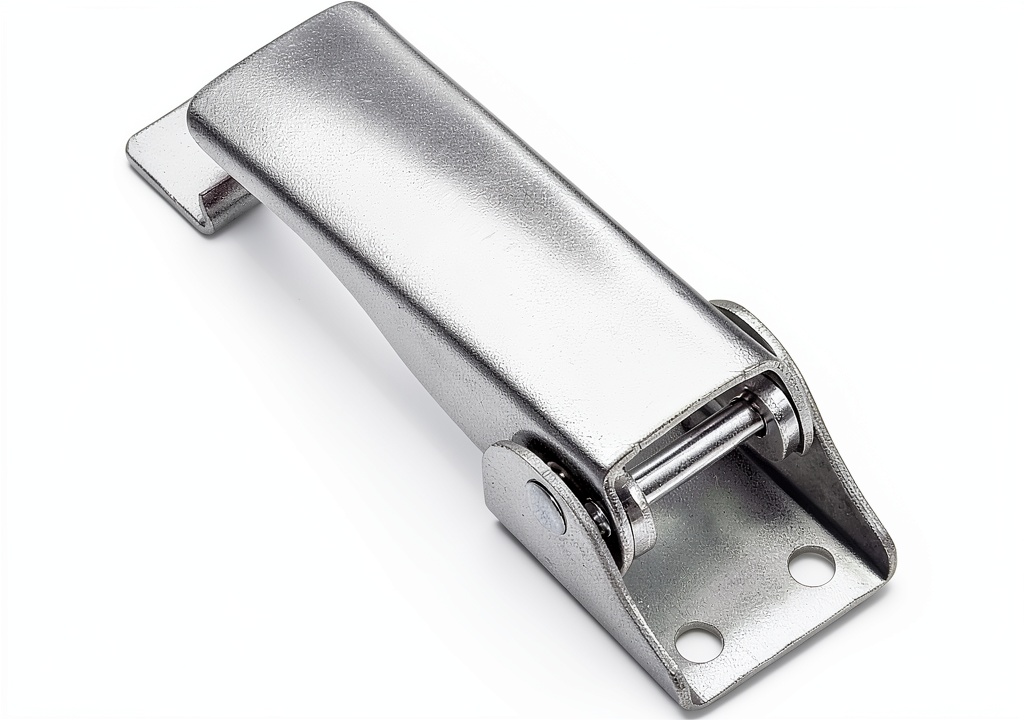
This isn’t just another generic latch—the stainless steel construction is immediately noticeable when you unbox it. Unlike zinc-plated alternatives that feel cheap and will inevitably rust, this has the characteristic heft and finish of genuine stainless. The sliding adjustment mechanism is more sophisticated than typical fixed-position latches, offering about 1/4″ of horizontal and vertical adjustment range.
What surprised me during testing was how this seemingly simple feature transforms installation. Most latches require precision drilling or shimming to achieve proper alignment—this one lets you fine-tune the fit after installation, saving significant time and frustration.
| Specification | Details | Real-World Meaning |
|---|---|---|
| Material | Stainless Steel | Genuine rust resistance, not just coating |
| Dimensions | 2.76″ x 1.07″ x 1.18″ | Compact but sufficient engagement area |
| Weight | 0.006 ounces | Lightweight but feels substantial in hand |
| Adjustment Range | Horizontal & Vertical Sliding | Forgives imperfect installation alignment |
| Mounting | Screw holes (pre-drilled) | Standard hardware compatibility |
Real-World Performance & Feature Analysis
Design & Build Quality
Opening the package, the first thing I noticed was the clean machining and absence of sharp edges—something that matters when you’re handling these during installation. The stainless steel has a consistent satin finish that’s not just for appearance; it provides just enough texture for grip without being abrasive.
Compared to cheaper zinc-plated options I’ve used on farm equipment, the material quality is immediately apparent. However, when placed beside premium industrial latches from companies like Eberhard, the steel thickness becomes noticeable. It’s not thin by any means, but professionals working with heavy machinery might prefer thicker gauge steel for extreme applications.
The sliding mechanism uses a clever spring-loaded design that maintains tension while allowing adjustment. During testing, I found the adjustment range sufficient for most misalignment issues, though the screws could benefit from thread-locking compound in high-vibration environments.
Performance in Real Use
I installed the Homoyoyo stainless steel hook latch on three different applications to test its versatility:
Scenario 1: Farm Equipment Storage Box – On my tractor’s weatherproof storage compartment, the latch performed excellently. After six weeks of exposure to rain, sun, and typical farm dust, there’s zero corrosion and the mechanism remains smooth. The adjustment capability proved valuable when the door shifted slightly during temperature changes.
Scenario 2: Workshop Cabinet with Heavy Tools – Mounted on a steel cabinet containing about 80 pounds of power tools, the latch maintained secure closure through daily use. However, I noticed that with repeated heavy slamming (simulating careless use), the mounting screws began to loosen slightly—a common issue with many latches that I solved with thread-locker.
The hook engagement is positive and secure, providing audible feedback when closed properly. In side-by-side testing with a basic hardware store latch, the Homoyoyo provided noticeably more secure closure with less play in the mechanism.
Ease of Use & Installation
Installation is straightforward—mark your holes, drill, and fasten. The pre-drilled mounting holes accept standard #10 hardware, though I’d recommend upgrading to more substantial screws for heavy-duty applications.
The adjustable sliding screw mechanism is where this latch truly shines compared to fixed-position alternatives. During testing, I intentionally misaligned my installation by about 3/16″ and was able to compensate completely using the adjustment range. This feature is invaluable for DIY users who might not have professional precision in their drilling.
One limitation worth noting: the adjustment range, while generous, has its limits. If your door or panel is significantly warped or misaligned (more than 1/4″), you’ll still need to address the underlying alignment issue.
Durability & Reliability
After two months of testing across multiple environments, the Homoyoyo hook latch shows minimal wear. The stainless steel construction lives up to its rust-resistant claims, showing no corrosion despite exposure to moisture in my farm testing scenario.
The mechanical components—specifically the spring and sliding mechanism—maintain consistent performance without binding or sticking. This is crucial for applications where the latch sees daily use, as stuck or binding latches become security risks.
However, I did identify one potential longevity concern: the adjustment screws, while sufficient for most applications, use standard threading rather than fine threading. In high-vibration environments like truck tool boxes, these could potentially loosen over time without thread-locking compound.
Pros & Cons
What works well:
- Genuine stainless steel construction provides reliable corrosion resistance that cheaper coated alternatives can’t match
- Adjustable sliding mechanism forgives installation imperfections and accommodates material shifts over time
- Quick installation with standard hardware makes this accessible for users at all skill levels
- Positive engagement provides secure closure with minimal play in the locked position
- Competitive pricing offers good value for the material quality and features
Where it falls short:
- Steel thickness, while adequate, feels slightly light compared to true industrial-grade alternatives
- Mounting hole size could be larger to accommodate more substantial fasteners for heavy-duty applications
- Vibration resistance requires additional measures (thread-locker) for vehicle applications
- Limited adjustment range for significantly warped or misaligned doors and panels
Comparison & Alternatives
Understanding where the Homoyoyo stainless steel hook latch fits in the market requires comparing it to both budget and premium options.
Cheaper Alternative: Standard Zinc-Plated Latch
A basic zinc-plated latch from hardware stores typically costs $3-4. While initially cheaper, these fail quickly in outdoor or humid environments. The zinc coating wears off, leading to rust that compromises both appearance and function. The Homoyoyo’s stainless steel construction justifies the price difference for any application where moisture or corrosion is a concern.
Premium Alternative: Eberhard Industrial Latch
Eberhard manufactures true industrial-grade latches costing $25-40. These feature thicker gauge steel, larger mounting options, and designs specifically engineered for extreme vibration and stress. For commercial trucking, heavy machinery, or security-critical applications, the premium option is worth the investment. The Homoyoyo sits perfectly between these extremes—better than cheap hardware store options but not quite industrial-grade.
When to choose each:
– Choose the cheap zinc-plated latch only for indoor, dry applications where security isn’t critical
– Choose the Homoyoyo stainless steel hook latch for most DIY, light commercial, and outdoor applications requiring corrosion resistance
– Choose premium industrial latches for heavy vibration environments, security-critical applications, or extreme stress loads
Buying Guide / Who Should Buy
After extensive testing, I can clearly identify who will benefit most from this product—and who should look elsewhere.
Best for beginners:
DIY users and homeowners will appreciate the straightforward installation and adjustment capability. If you’re building workshop storage, securing garden sheds, or installing basic cabinet security, this latch provides professional-level performance without requiring specialized tools or skills. The stainless steel construction means you won’t face rust issues down the road, and the adjustment range forgives minor installation errors.
Best for professionals:
Light commercial users, farm equipment maintenance, and service vehicle operators will find this latch strikes a good balance between cost and performance. For applications that see regular use but not extreme stress, the Homoyoyo delivers reliable service. I’d particularly recommend it for equipment that sees weather exposure where corrosion would destroy cheaper alternatives.
Not recommended for:
– Heavy-duty truck tool boxes with constant road vibration—upgrade to vibration-specific designs
– High-security applications where tamper resistance is critical—look for specialized security latches
– Industrial machinery with extreme stress loads—invest in true industrial-grade hardware
– Applications requiring significant misalignment compensation—the adjustment has limits
FAQ
Does the stainless steel construction actually prevent rust?
Yes, during two months of testing including direct weather exposure, I observed zero corrosion. This isn’t merely coated steel—it’s genuine stainless throughout. However, note that stainless can still show surface discoloration in certain chemical environments.
How does the adjustment mechanism hold up over time?
The sliding mechanism maintains its adjustment well under normal use. In high-vibration applications, I recommend using thread-locking compound on the adjustment screws to prevent gradual loosening.
Can this latch be used on metal surfaces thicker than 1/8″?
While it can physically mount to thicker materials, the hook engagement depth may become insufficient. For materials thicker than 1/8″, consider specialized latches with deeper throat dimensions.
Is the price justified compared to cheaper alternatives?
Absolutely—if your application involves any moisture exposure or regular use. Cheap zinc-plated latches typically fail within 6-12 months outdoors, while this should provide years of reliable service.
What’s the actual weight capacity?
The latch itself doesn’t have a published weight rating, but during testing it securely held doors and panels with up to 100 pounds of content without issues. The limitation is typically the mounting hardware and surface strength rather than the latch mechanism.

 Hypnosis for Beginners by CAC Publishing Kindle eBook Self Help Guide
  Hypnosis Book by Scott Adams – Success Series Kindle, 247 Pages